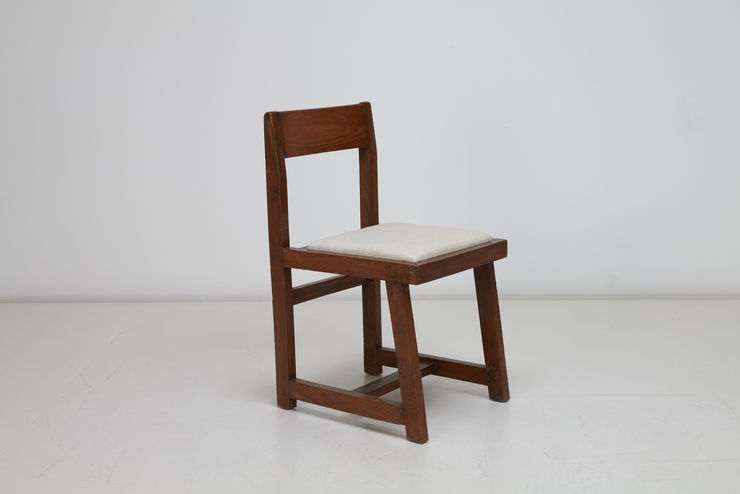
Pierre Jeanneret Box Cushion Chair, 1960


Pierre Jeanneret
Box Cushion Chair , 1960
Indian rosewood with inset linen cushion
Width - 41.5 cm - 16¼ inches
Depth - 49 cm -.49¼ inches
Height - 80 cm - 31½ inches
Seat Height - 47 cm - 18½ inches
Depth - 49 cm -.49¼ inches
Height - 80 cm - 31½ inches
Seat Height - 47 cm - 18½ inches
From a government building, Chandigarh India
Sold
Further images
An original Pierre Jeanneret Box Cushion Chair, dating from circa 1960 and made for the Chandigarh project in India. This chair is one of a group of five examples that...
An original Pierre Jeanneret Box Cushion Chair, dating from circa 1960 and made for the Chandigarh project in India.
This chair is one of a group of five examples that we acquired together from the same building in Chandigarh. Four of the chairs are offered as a closely matched set, with this fifth example available individually. All five share the same provenance, came from the same building and were purchased together from the same source.
The Box Cushion Chair is a very simple piece of institutional furniture. Constructed in solid Indian rosewood, the chair has an open rectangular frame with slightly angled front legs, straight rear uprights and a broad, gently curved solid rosewood backrest. The seat sits within the timber frame and is finished with a loose upholstered cushion.
As with much of Jeanneret's furniture for Chandigarh, the construction is straightforward but extremely well considered. The rear uprights continue uninterrupted from the floor to the backrest, while the front and rear legs are connected close to floor level by horizontal stretchers. A central stretcher runs beneath the chair, tying the structure together and giving what is otherwise a visually light chair considerable strength.
The solid Indian rosewood has developed a warm, even patina through decades of use. There are scratches, dents, small marks and variations in colour throughout the frame, all of which have been retained as part of the chair's history rather than refinished away.
The frame has been carefully structurally restored by our trusted conservator, then lightly cleaned and waxed while preserving the historical surface. All of the timber components are original to the chair.
The loose seat cushion has been newly upholstered in a natural off-white woven fabric. We deliberately chose a quiet upholstery that sits comfortably against the warm, patinated rosewood without distracting from the construction of the chair.
For us, much of the appeal of this design lies in its simplicity. There is very little unnecessary material and almost no decoration. The broad timber backrest, open frame and slightly splayed front legs provide all the visual interest, while the loose cushion gives the chair a softer appearance than the caned Box Chair.
Having five examples from the same building also gives an interesting opportunity to see the small variations that develop between pieces of institutional furniture over many years of use. Although the chairs share the same design and history, each has developed its own subtle differences in colour, patina and wear.
The chair remains completely practical for use and works equally well as a dining, desk or occasional chair. Its relatively narrow proportions and open construction make it particularly easy to place.
We have specialised in Pierre Jeanneret furniture for nearly nineteen years and have extensive experience in identifying, sourcing, restoring and selling his work. Given the number of later reproductions and incorrectly attributed pieces now on the market, we understand the importance of provenance, construction, materials and restoration when assessing Chandigarh furniture. We are always happy to discuss these aspects in detail and answer any questions regarding the attribution, provenance or restoration of our Chandigarh pieces.
Viewing is warmly welcomed at our West London showroom.
High-resolution photographs, detailed condition reports and video inspections are available upon request.
We offer local, national and international shipping.
Please contact us for further information or to arrange a private viewing.
Literature
Related artworks
-
 Pierre Jeanneret, Rare Child's Chair, 1958£2,500 + vat
 -
Pierre Jeanneret, Box Chair, 1960 Sold
-
Pierre Jeanneret, Box Cushion Chair , 1960 Sold
-
Pierre Jeanneret, Box Cushion Chairs, c1960 Sold
-
Pierre Jeanneret, Box Armchairs, Set of Four, 1953-54 Sold