Pierre Jeanneret Pigeonhole Clerk's Desk, 1957–58


Pierre Jeanneret
Pigeonhole Clerk's Desk , 1957-58
Indian Rosewood & Leather
Width - 122 cm - 48 inches
Depth - 81 cm - 32 inches
Height - 71 cm - 28 inches
Depth - 81 cm - 32 inches
Height - 71 cm - 28 inches
From a government building, Chandigarh India
Sold
Further images
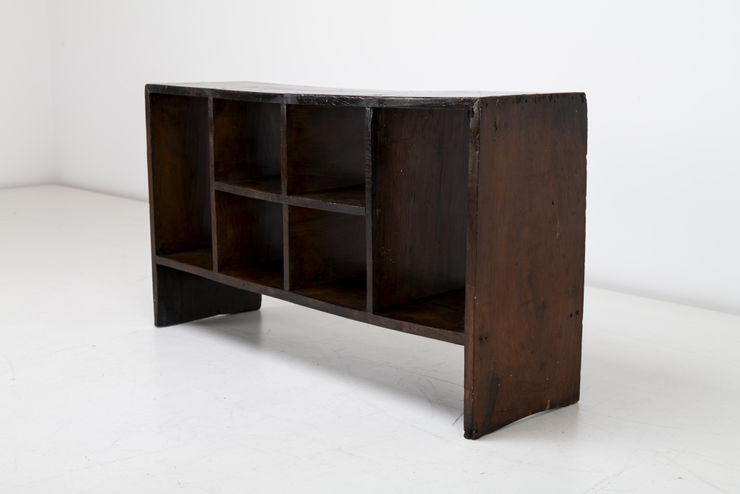
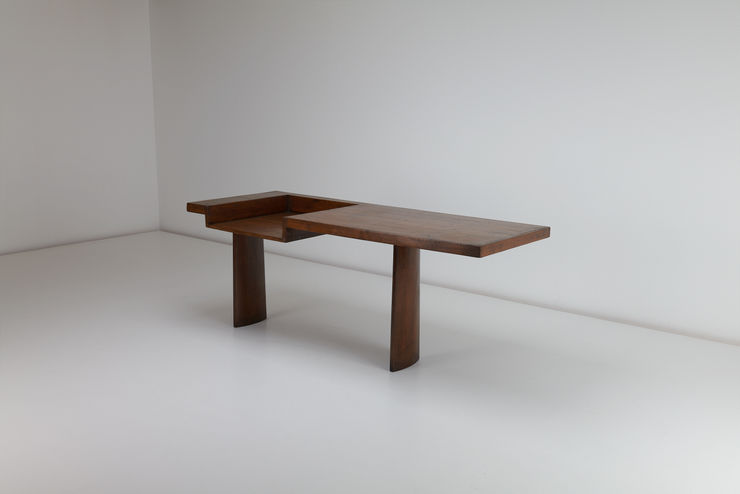
The beautiful clerk's desk, or pigeonhole desk, are both names this design has acquired over the years. In Jeanneret's original drawing, it is simply titled 'Office Table'. Whatever you choose...
The beautiful clerk's desk, or pigeonhole desk, are both names this design has acquired over the years. In Jeanneret's original drawing, it is simply titled 'Office Table'. Whatever you choose to call it, this is a remarkable piece of design and one of our personal favourites by Pierre Jeanneret.
Viewed purely as an object of design, it is exceptionally interesting. All four sides are different, and from each of its four 45-degree angles the desk takes on a different character. It is impactful, architectural and possesses a certain magic. Many of Jeanneret's Chandigarh designs have this architectural quality, and this desk is a particularly fine example.
The two-sided open leg section beneath the desk is not simply visually interesting. Its openness would have allowed air to circulate around the person using the desk, an obvious practical advantage in Chandigarh's hot climate. Jeanneret achieved this through a robust angled leg and supporting structure, a language seen extensively throughout his furniture. These details may seem small, but it is precisely this combination of form, function and construction that makes the piece so special.
Another often overlooked detail is the angled pen tray floating within the drawer. Its position and angle are beautifully considered: a small detail that is both practical and visually satisfying.
The pigeonholes were originally designed to accommodate files of foolscap paper. Today, they are equally useful for books, documents and objects. Filling the rear of the desk with your own collection gives the piece an especially personal quality and makes the back almost as interesting as the front.
For us, this desk ticks all the boxes. It is practical, exceptionally well balanced and beautifully made, with a strong sculptural presence. There are many pieces of design that look wonderful but are not particularly practical, and others that are wonderfully functional but lack visual impact. This one manages to achieve both.
It is at its most striking when the pigeonhole section is on display, although we have also used these desks on projects with the rear positioned against a wall. Even in this orientation, the sculptural quality of the design remains evident and the desk still feels complete.
As with all of our Jeanneret pieces, we specifically look for examples with a strong depth of original patina, and this particular desk has exactly that. If you are looking for something without patina, this is probably not the piece for you. We clean our furniture carefully, but we do not remove the signs of decades of institutional use. The age, wear and patina are part of the history of the piece. All of the principal sissoo components remain original.
The design was produced in both Indian rosewood, or sissoo, and teak. This example is in sissoo, and we also have the same desk available in teak. The two woods age and develop patina quite differently, and we love them both for different reasons. If you would like us to explain the differences between the two versions, please do get in touch.
The desk has been professionally restored in the UK and is presented in excellent vintage condition. As is common with these desks, the original plywood can suffer from delamination and loss of structural strength over time. The plywood elements, the desktop and drawer lining, have therefore been replaced during restoration. We generally finish these desks with a black leather writing surface, although this can be customised to a colour of your choice.
We have specialised in Pierre Jeanneret furniture for nearly nineteen years and have extensive experience in identifying, sourcing, restoring and selling his work. Given the number of later reproductions and incorrectly attributed pieces now on the market, we understand the importance of provenance, construction, materials and restoration when assessing Chandigarh furniture. We are always happy to discuss these aspects in detail and answer any questions regarding the attribution, provenance or restoration of our Chandigarh pieces.
Viewing is warmly welcomed at our West London showroom.
High-resolution photographs, detailed condition reports and video inspections are available upon request.
We offer local, national and international shipping.
Please contact us for further information or to arrange a private viewing.
Literature
E. Touchaleaume and G. Moreau, Le Corbusier, Pierre Jeanneret: L’Aventure Indienne, Gourcuff Gradenigo, Paris, 2010, pp. 200–201 and 572, model PJ-BU-02-A illustrated; technical drawing of the model illustrated p. 572.
L. and P. Seguin, Le Corbusier, Pierre Jeanneret: Chandigarh, India, 1951–66, Galerie Patrick Seguin, Paris, 2014, pp. 246–249, 267 and 288, model illustrated.
Related artworks
-
 Pierre Jeanneret, Pigeonhole Clerk's Desk, 1957-58£12,000 + VAT
 -
Pierre Jeanneret, Pigeonhole Clerk's Desk , 1957-58 Sold
-
Pierre Jeanneret, Pigeonhole File Rack , 1957 Sold
-
Le Corbusier & B.V. Doshi, Console , 1960 Sold